As urbanization accelerates and consumer behaviour evolves, waste management has shifted from a peripheral civic issue to a national development priority. India generates over 165,000 metric tonnes of municipal solid waste (MSW) daily—a figure expected to reach 165 million tonnes annually by 2030 as urban Centers expand.
While national collection rates under the Swachh Bharat Mission (SBM-U 2.0) have surpassed 95% across urban local bodies, the critical bottleneck remains processing and scientific disposal. Nationally, approximately 75% to 80% of collected waste is processed, leaving tens of thousands of tonnes daily to end up in open dumpsites or overflowing landfills.
National Overview: Solid Waste Generation & Processing Data
According to data from the Ministry of Housing and Urban Affairs (MoHUA) and the Central Pollution Control Board (CPCB), India’s solid waste landscape presents a complex balance of progress and operational challenges:
| Metric | National Estimate | Key Takeaway |
| Daily Waste Generation | ~166,000 Tonnes Per Day (TPD) | Rapid urban consumption drives ~4% annual volume growth. |
| Door-to-Door Collection | ~96% of urban wards | Massive improvements driven by Swachh Bharat Mission 2.0. |
| National Processing Rate | ~75% – 80% | Up significantly from just 16% in 2014, though regional disparities remain high. |
| Legacy Waste Accumulation | >300 Million Metric Tonnes | Dumpsites like Ghazipur (Delhi) and Deonar (Mumbai) require bio-mining and remediation. |
The primary obstacle to achieving 100% processing capacity across Indian states is mixed, unsegregated waste at source. When organic waste mixes with recyclables, hazardous chemicals, and sanitary goods, processing machinery breaks down, composting becomes contaminated, and incineration becomes energy-inefficient.
Himachal Pradesh: Operationalizing the Solid Waste Management Rules, 2026
To address source segregation and non-compliance, Himachal Pradesh has taken proactive steps under the newly notified Solid Waste Management Rules, 2026, which came into force on 1st April, 2026, replacing the legacy 2016 framework.
Sh. Sushil Kumar Singla (IFS), Secretary-cum-Member Secretary of the Himachal Pradesh State Pollution Control Board (HPSPCB), outlined the state’s strategy to shift from passive collection to mandatory compliance across urban, rural, commercial, institutional, and government establishments.
Under the active oversight of the Hon’ble Supreme Court of India (Order dated 18.08.2026 in Civil Appeal No. 6174 of 2023), Himachal Pradesh is establishing a strict regulatory framework backed by statutory enforcement.
1. Mandatory 4-Stream Source Segregation
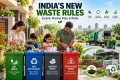
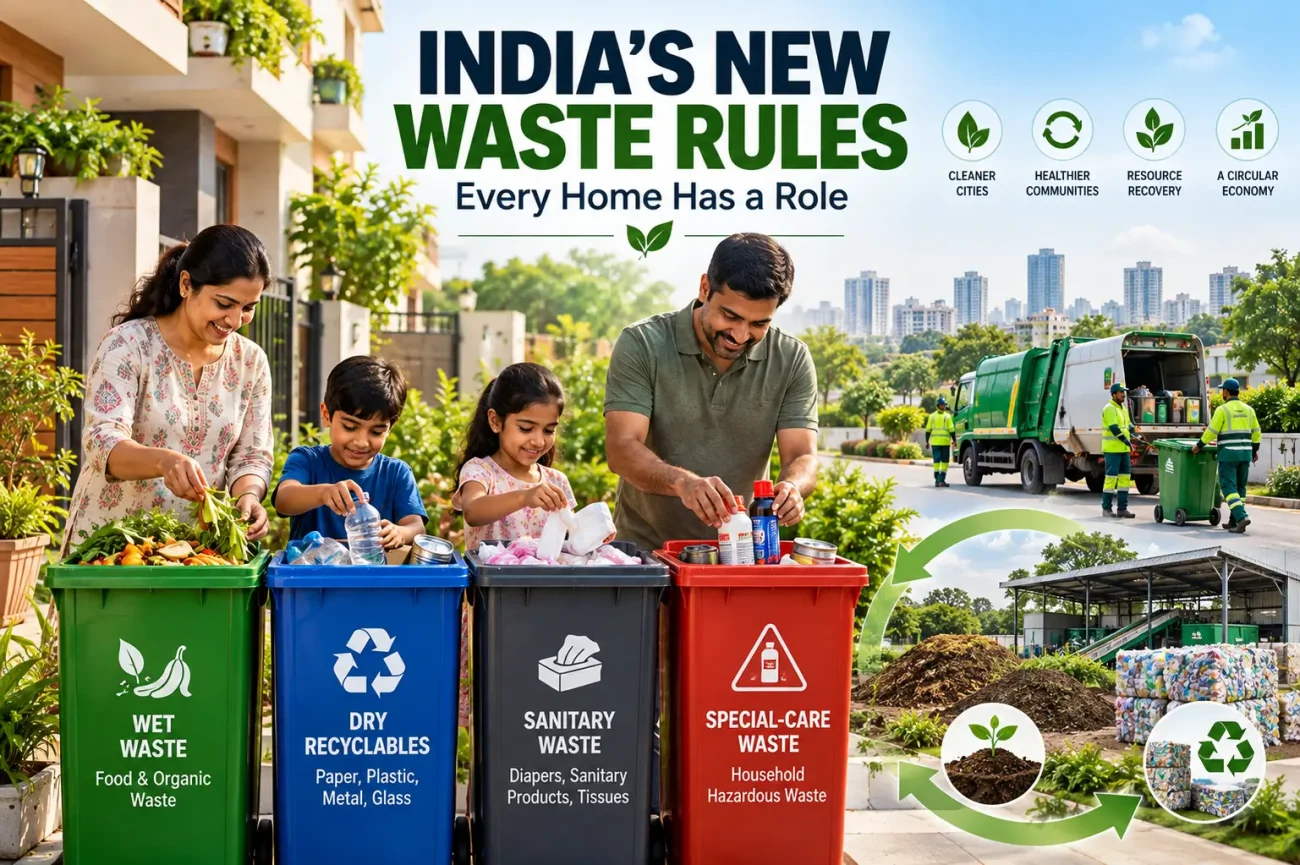
Rather than the conventional two-bin system (Wet/Dry), the 2026 framework mandates that every generator segregate waste into four distinct streams before handover:
- Wet Waste: Biodegradable kitchen leftovers, food waste, and organic materials suitable for composting or bio-methanation.
- Dry Waste: Recyclable materials including paper, cardboard, plastics, glass, metals, and dry textiles.
- Sanitary Waste: Used diapers, sanitary towels, and pads, which must be securely wrapped in pouches or wrapping materials provided by manufacturers/brands before disposal.
- Special Care Waste: Household hazardous materials, including CFL/fluorescent bulbs, expired medicines, paint cans, used syringes, broken mercury thermometers, and consumer batteries.
2. Enforcement via Power & Water Disconnection
To enforce compliance among Bulk Waste Generators (BWGs)—including hotels, commercial complexes, educational institutes, and large residential societies:
- Deputy Commissioners, in coordination with Local Bodies, must identify all BWGs within six weeks.
- Identified BWGs will receive formal written notices to establish on-site processing facilities or manage waste through authorized agencies.
- Strict Penalty: Any non-compliant BWG faces temporary disconnection of electricity and water supply, issued directly through the District Collector’s Special Cell under Rule 4 of the SWM Rules, 2026, and Article 51A(g) of the Constitution of India.
3. Extending Oversight to Rural Gram Panchayats
Recognizing that waste dumping in fragile hill ecologies threatens river basins and mountain forests, the 2026 implementation plan empowers Gram Panchayats and Rural Local Bodies to establish door-to-door collection. Rural households are encouraged to practice home composting for wet waste while preventing open burning, roadside dumping, and littering in water channels.
4. Students as “Household Supervisors”
Through the Department of School & Higher Education, theoretical and practical SWM modules are being integrated into school curricula. Students are trained as “Household Supervisors” tasked with guiding their families to ensure 100% source segregation at home, backed by periodic compliance audits submitted to District Collectors.
Best Practices in Solid Waste Management Across India
Himachal Pradesh’s statutory enforcement model complements several proven waste management models developed across India over the past decade:
Indore, Madhya Pradesh: The Gold Standard of Source Segregation
Indore has consistently ranked as India’s cleanest city by enforcing 100% source segregation into six streams at the household level. Indore eliminated roadside garbage vulnerable points (GVP), deployed GPS-tracked collection vehicles, and set up bio-CNG plants that convert organic municipal waste into fuel for public transport buses.
Ambikapur, Chhattisgarh: Zero-Landfill Model via Solid Liquid Resource Management (SLRM)
Ambikapur eliminated its traditional landfills by implementing a decentralized SLRM model led by women self-help groups (SHGs). Waste collected twice daily is sorted into over 150 sub-categories at local resource recovery centers, turning waste collection into a self-sustaining commercial model through the sale of recyclables and organic compost.
Pune, Maharashtra: Integrating Informal Waste Pickers (SWaCH Cooperative)
Pune integrated over 3,500 informal waste pickers into a formal door-to-door collection framework through the SWaCH cooperative. This model provides dignified livelihoods to waste workers while significantly reducing the municipal corporation’s operational costs.
The Path Forward
Achieving circular waste management requires combining clear policy frameworks with community-level adoption. Provisions such as Himachal Pradesh’s mandatory 4-stream segregation, enforcement measures for bulk generators, and youth-led auditing frameworks offer a structured template for hill states and urban local bodies across India.
An article by; Rajiv Kumar