

India’s agriculture sector is entering a transformational phase where farmers are not only producing food but also earning additional income by reducing carbon emissions and improving soil health. Through emerging carbon credit schemes, Indian farmers are beginning to benefit financially from climate-friendly farming practices such as biochar production, crop residue management, agroforestry, regenerative agriculture, and soil carbon enhancement.
As the global demand for carbon offsets rises, India is positioning itself as a major contributor to the green economy while creating new income opportunities for rural communities.
What Is a Carbon Credit?
A carbon credit represents one metric ton of carbon dioxide (CO₂) removed or prevented from entering the atmosphere. Governments and companies purchase these credits to offset their emissions and meet sustainability goals.
In agriculture, farmers can generate carbon credits by:
- Avoiding crop residue burning
- Producing biochar from agricultural waste
- Increasing soil organic carbon
- Practicing agroforestry
- Adopting regenerative farming methods
- Reducing fertilizer-related emissions
Once verified by international carbon registries, these credits can be traded in domestic and global carbon markets.
Why India Has Huge Potential in Carbon Farming
India has one of the world’s largest agricultural ecosystems:
- Over 140 million hectares of cultivated land
- Nearly 86% small and marginal farmers
- Massive availability of agricultural biomass
- Strong potential for regenerative agriculture adoption
Every year, India burns millions of tons of crop residue, leading to severe air pollution and greenhouse gas emissions. Carbon farming and biochar initiatives aim to convert this agricultural waste into economic value instead of pollution.
Research suggests that large-scale adoption of carbon farming practices in India could offset a substantial share of the country’s transport-sector emissions.
What Is Biochar?
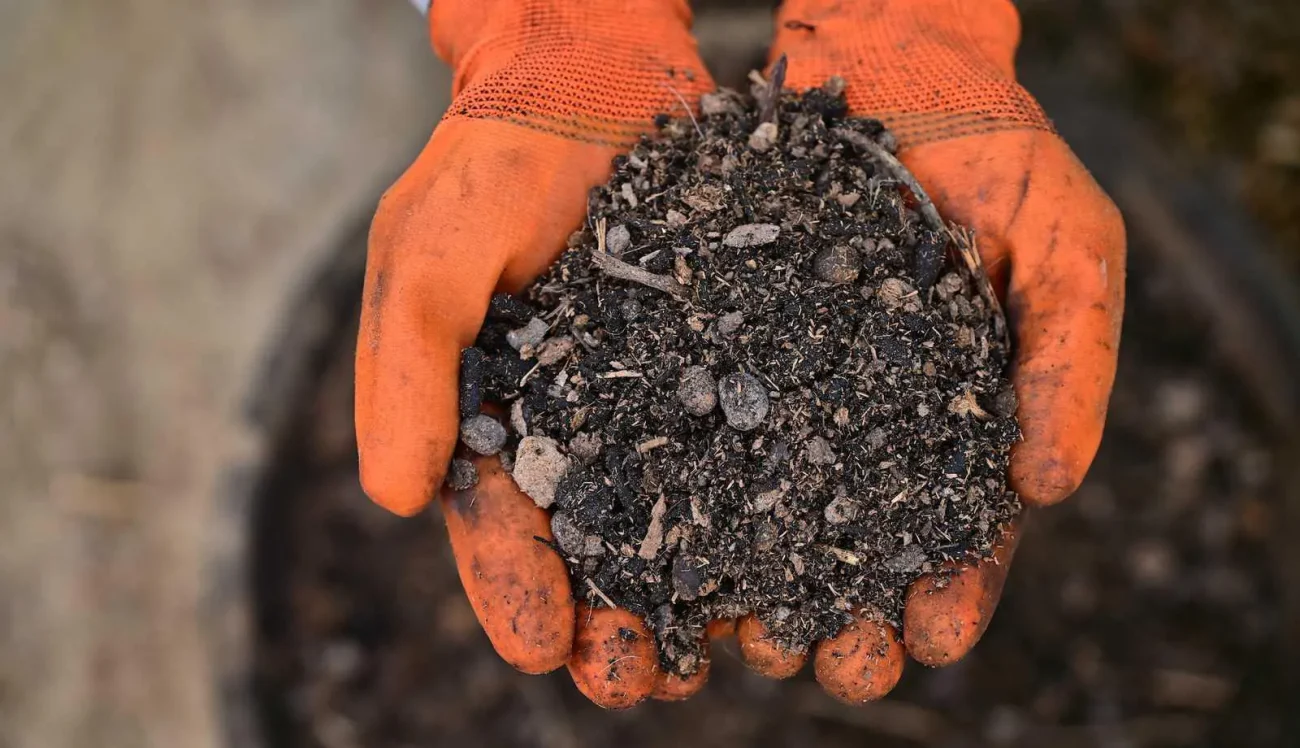
Biochar is a carbon-rich material created by heating agricultural waste in a low-oxygen environment through a process known as pyrolysis.
Agricultural residues such as:
- Rice straw
- Sugarcane waste
- Maize stalks
- Cotton stalks
are converted into stable charcoal-like material instead of being openly burned.
Benefits of Biochar
Biochar offers multiple long-term benefits:
- Locks carbon into the soil for hundreds of years
- Improves soil fertility
- Enhances water retention
- Reduces fertilizer dependency
- Generates carbon credits for farmers
Experts consider biochar one of the world’s most scalable carbon removal technologies.
How the Carbon Credit Process Works
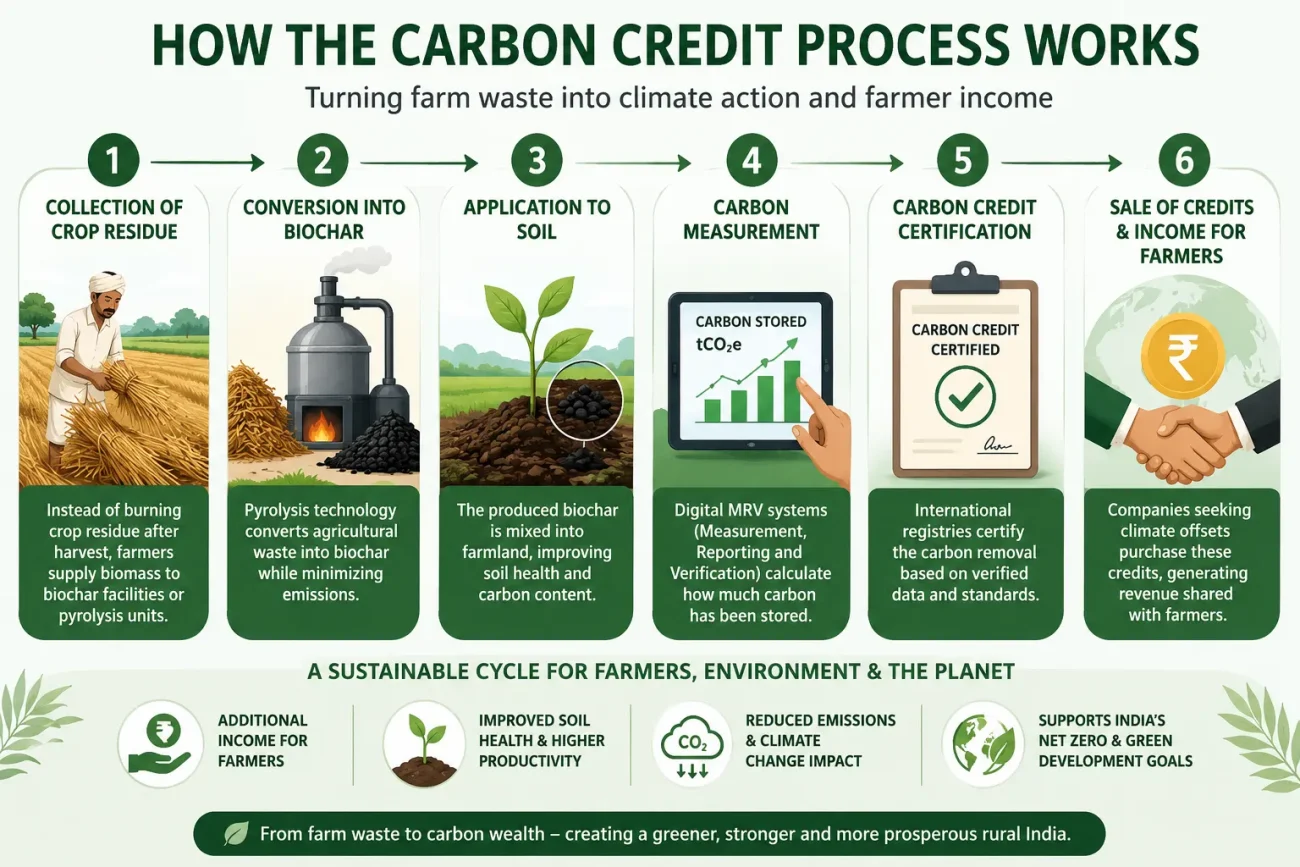
Step 1: Collection of Crop Residue
Instead of burning crop residue after harvest, farmers supply biomass to biochar facilities or pyrolysis units.
Step 2: Conversion Into Biochar
Pyrolysis technology converts agricultural waste into biochar while minimizing emissions.
Step 3: Application to Soil
The produced biochar is mixed into farmland to improve soil health and carbon content.
Step 4: Carbon Measurement
Digital MRV systems (Measurement, Reporting, and Verification) calculate the amount of carbon stored.
Step 5: Carbon Credit Certification
International registries certify the carbon removal process.
Step 6: Sale of Credits
Companies seeking climate offsets purchase these carbon credits, generating revenue shared with farmers.
Global Investments and Industry Interest
The carbon farming sector in India is attracting significant global attention.
One major development occurred when Google partnered with Indian climate-tech startup Varaha to purchase 100,000 tons of carbon removal credits generated through biochar projects in India. This marked Google’s first carbon removal investment in the country.
Another major initiative is BiocharIND, launched by PRESPL, APChemi, and Intellecap. The project plans:
- INR 1.5 billion investment
- Five large biochar facilities
- 10,000 MT annual biochar production initially
- Around 25,000 tCO₂e carbon credits annually from a single facility
The initiative aims to reduce stubble burning, improve soil quality, increase productivity, and create additional income streams for farmers.
Income Opportunities for Farmers
Carbon farming is emerging as an additional revenue stream beyond traditional crop sales.
Some pilot projects in India have shown that farmers can potentially earn between ₹20,000 and ₹40,000 per hectare through carbon-linked agricultural practices.
Key Benefits for Farmers
- Additional annual income
- Improved soil fertility
- Lower irrigation requirements
- Reduced fertilizer costs
- Reduced pollution-related penalties
- Better climate resilience
Experiments involving biochar and soil carbon enhancement have also demonstrated improvements in crop productivity in certain regions of India.
Government and Institutional Support
Several Indian institutions are now supporting the carbon farming ecosystem:
- NABARD has launched biomass and plantation-based carbon credit pilot projects.
- IIT Roorkee is working on farmer-oriented carbon credit models.
- Climate-tech startups are deploying AI-powered MRV systems for carbon accounting.
India is also developing its domestic carbon market framework, which could significantly accelerate farmer participation in the future.
Challenges in the Carbon Credit Ecosystem
Despite the opportunities, several challenges remain:
1. Verification Complexity
Carbon credits require scientific monitoring, auditing, and certification.
2. Limited Farmer Awareness
Many farmers still lack understanding about:
- Carbon markets
- Registration procedures
- Contract structures
- Payment systems
3. Delayed Payments
Some projects face delays due to compliance and verification procedures.
4. Market Volatility
Carbon credit prices fluctuate depending on international demand and policy changes.
5. Infrastructure Costs
Large-scale biochar systems require substantial investments in technology and logistics.
The Future of Carbon Farming in India
The global demand for high-quality carbon removal credits is increasing rapidly as industries and technology companies pursue net-zero goals.
India’s advantages include:
- Abundant biomass resources
- Large farming population
- Cost-effective climate interventions
- Growing agri-tech ecosystem
These factors make India one of the most promising carbon farming markets globally.
If implemented transparently and inclusively, carbon credit systems could transform Indian agriculture into a climate-positive rural economy that benefits both farmers and the environment.
Conclusion
Carbon credit schemes are opening a new economic pathway for Indian farmers. Technologies like biochar are converting agricultural waste into valuable climate assets while improving soil health and reducing pollution.
Beyond carbon income, farmers benefit through:
- Healthier soil
- Improved productivity
- Lower input costs
- Greater resilience to climate change
As India moves toward sustainable agriculture and net-zero ambitions, carbon farming may become one of the country’s biggest rural green economy opportunities in the coming decade.
By Suman Choudhary