Agriculture has always been the backbone of India’s economy—supporting livelihoods, ensuring food security, and driving rural development. Yet, when we compare its contribution to GDP with developed economies, a striking contrast emerges.
This difference is not just about numbers—it reflects deeper realities of productivity, technology adoption, and economic transformation.
India’s Agriculture GDP: Current Scenario
India’s latest data (2025–early 2026) shows:
- Agriculture contributes 15–18% of GDP
- Sector growth is around 3% annually (real terms)
- Nearly 40–45% of the workforce depends on agriculture
Key Insight
High workforce share + moderate GDP share = low productivity per worker
This highlights a core issue: a large population depends on agriculture, but output per person remains relatively low.
Agriculture in Developed Europe
In contrast, agriculture plays a very small role in developed economies like the European Union.
Snapshot of Developed Countries:
- Germany: ~0.7% of GDP
- United Kingdom: ~0.7%
- Switzerland: ~0.6%
- EU average: ~1.2%
Even countries with relatively higher agricultural roles:
- Greece: ~3.2%
- Romania: ~2.5%
In most developed nations, agriculture contributes less than 1% of GDP.
India vs Developed Europe: A Comparison
| Indicator | India | Developed Europe |
|---|---|---|
| Agriculture Share of GDP | ~16% | ~0.5–2% |
| Workforce in Agriculture | ~40–45% | ~1–5% |
| Productivity per Farmer | Low–Moderate | Very High |
| Mechanization | Moderate | Highly Advanced |
Why Is There Such a Big Difference?
1. Structural Transformation
Developed economies have transitioned through:
Agriculture → Industry → Services
India is still in the middle of this transition, with a large rural population dependent on farming.
2. Productivity Gap
European agriculture is:
- Highly mechanized
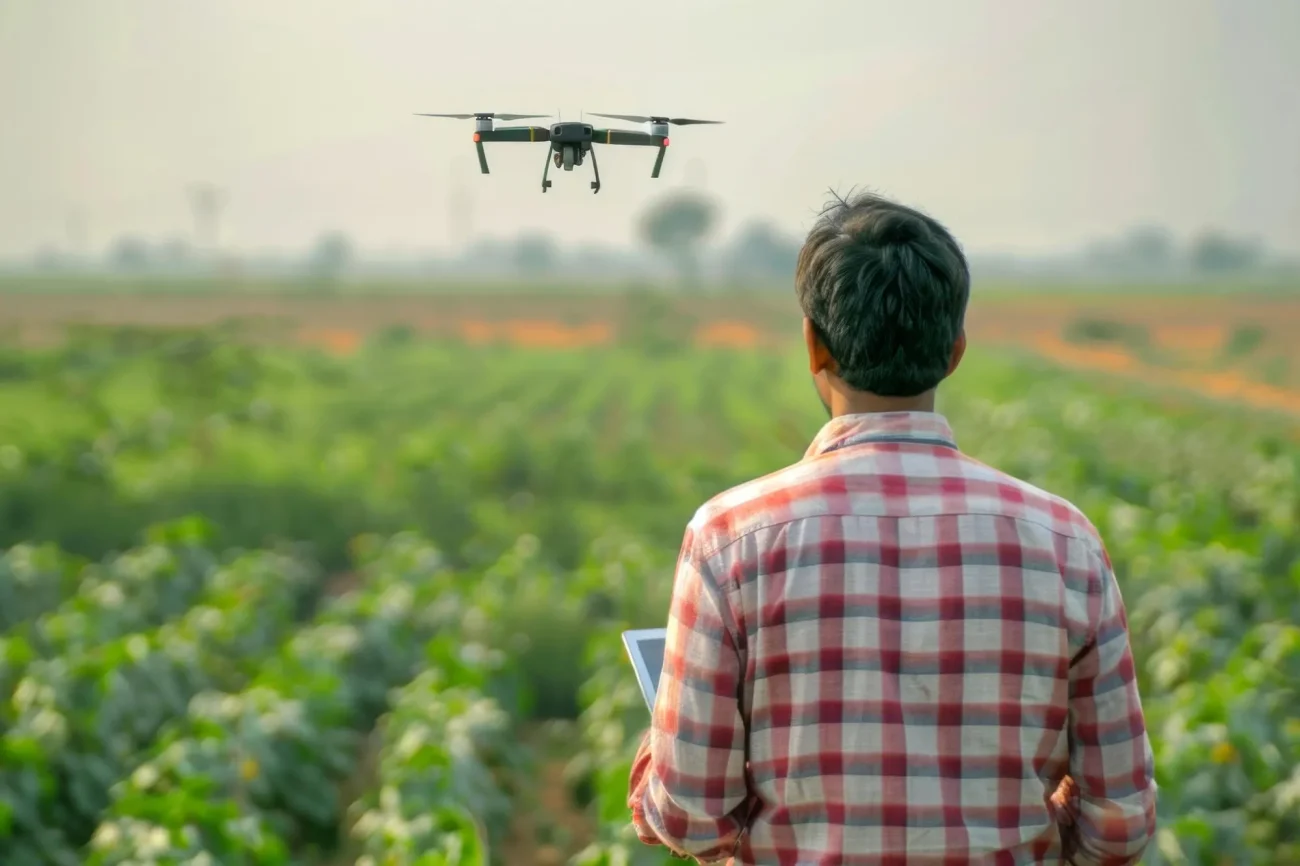
- Technology-driven (AI, precision farming)
- Supported by subsidies (e.g., Common Agricultural Policy)
Result: Fewer farmers produce more output
3. Employment Structure
- India: Labour-intensive farming
- Europe: Capital-intensive farming
For example, in Germany, only ~2% of the population works in agriculture, compared to over 40% in India.
4. Value Chain Development
Europe benefits from strong integration with:
- Food processing industries
- Export systems
- Retail and branding networks
India still faces:
- Post-harvest losses
- Weak supply chains
- Limited value addition
Global Perspective
As economies develop, agriculture’s share in GDP naturally declines:
- Low-income countries: 20–30%+
- Middle-income (like India): 10–20%
- High-income countries: <5%
Developed Europe represents the final stage of economic maturity
What This Means for India
Opportunities
- Agro-processing and value addition
- Export of high-value crops
- Digital agriculture and agri-startups
Challenges
- Fragmented land holdings
- Low farm incomes
- Climate vulnerability
Future Outlook
India is expected to:
- Gradually reduce agriculture’s GDP share
(due to faster growth in other sectors, not decline in agriculture) - Increase productivity per farmer
- Shift labour toward manufacturing and services
The real goal is modernization, not reduction
Conclusion
The comparison between India and developed European economies highlights a key economic principle:
“As economies grow, agriculture becomes more productive but less dominant in GDP.”
India’s challenge is unique:
- Too many people depend on agriculture
- Too little income is generated per person
The Way Forward
To bridge this gap, India must focus on:
- Technology adoption
- Rural industrialization
- Strong agricultural value chains