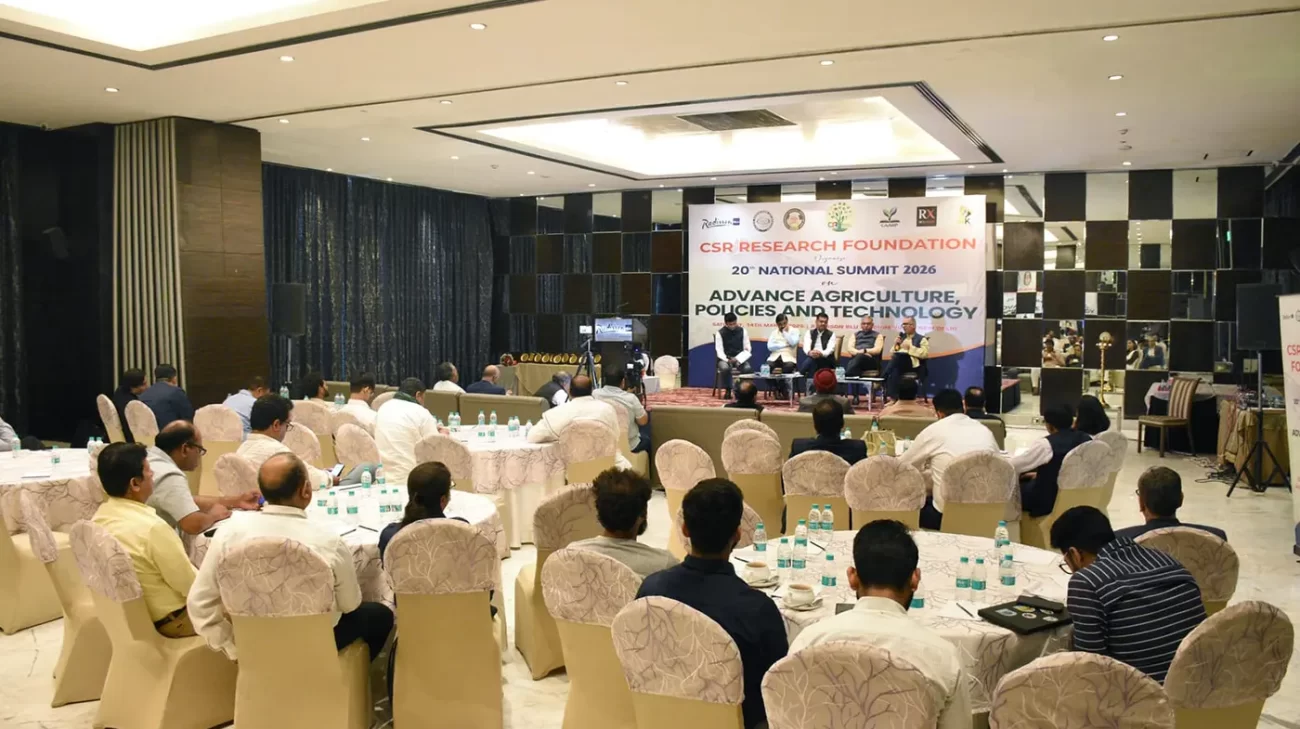
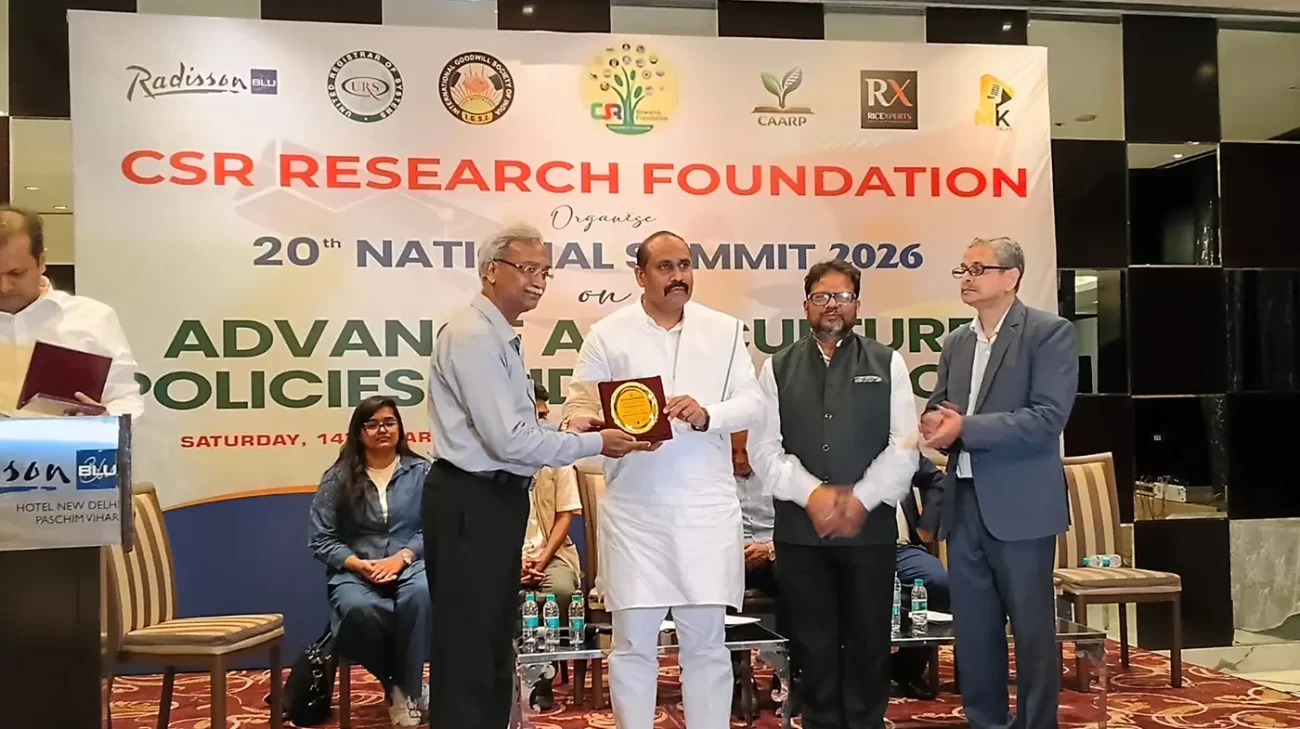
The Advance Agriculture Policies and Technology Summit 2026, held on March 14 at Radisson Blu, Paschim Vihar, Delhi, brought together policymakers, agricultural experts, researchers, and progressive farmers to discuss the future of Indian agriculture. Organized by the CSR Research Foundation as its 20th National Summit, the event focused on sustainable farming practices, agriculture policy reforms, and the growing role of agri-technology in transforming the farming sector.
The summit served as an important platform for stakeholders to exchange ideas, share innovations, and explore practical solutions for improving productivity, sustainability, and farmer welfare in India.
Addressing the Challenges in Indian Agriculture
Indian agriculture is currently facing multiple challenges including climate change, declining soil fertility, rising production costs, and fluctuating market prices. Experts at the summit emphasized that addressing these challenges requires strong policy frameworks combined with modern technology adoption.
Panel discussions highlighted the importance of bridging the gap between government schemes, scientific research, and real-world implementation on farms. While several innovative policies and technologies exist, experts stressed that their success depends on effective execution at the grassroots level.
Participants agreed that collaboration between government institutions, researchers, agribusiness companies, and farmers is essential for building a resilient agricultural ecosystem.
Focus on Sustainable Farming Practices
Sustainability emerged as one of the central themes of the summit. Experts discussed the importance of adopting eco-friendly farming techniques that protect natural resources while ensuring long-term productivity.
Sustainable farming practices discussed during the summit included:
- Precision farming techniques
- Water-efficient irrigation systems
- Soil health management
- Integrated crop and livestock farming
- Use of digital technologies for farm monitoring
These approaches not only improve crop yields but also help farmers reduce input costs and environmental impact.
Experts emphasized that sustainable agriculture is no longer just an environmental choice but a strategic necessity for food security and rural development in India.
Role of Agri-Technology in Modern Farming
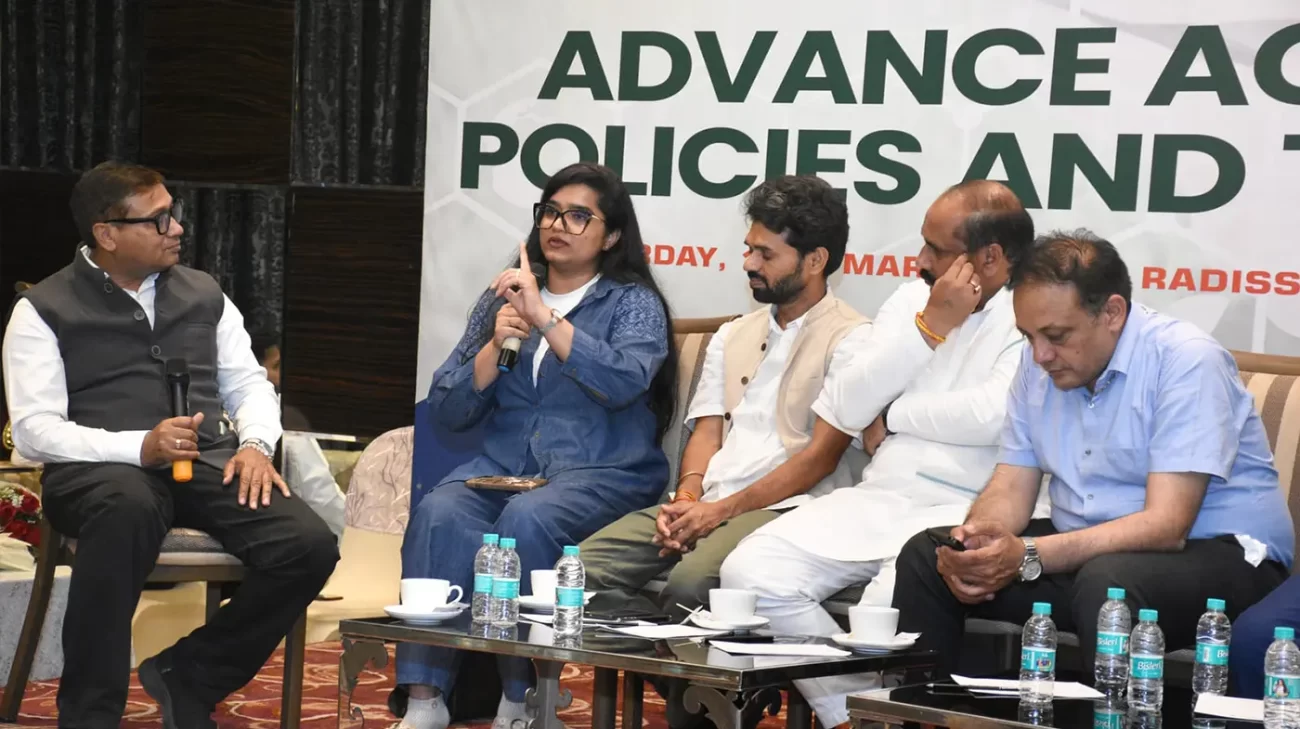
One of the most engaging segments of the summit focused on the growing role of agri-technology (Agri-Tech) in modernizing farming practices.
Technological innovations such as AI-based crop monitoring, smart irrigation systems, satellite imaging, digital farm management tools, and drone-based crop assessment are transforming traditional farming methods.
Speakers highlighted that technology enables farmers to:
- Monitor crop health in real time
- Optimize the use of fertilizers and pesticides
- Improve water management
- Predict weather patterns and pest attacks
- Increase overall farm efficiency
Experts stressed that while these technologies have great potential, awareness, training, and accessibility for farmers remain key challenges that must be addressed.
Insights from Government and Policy Experts
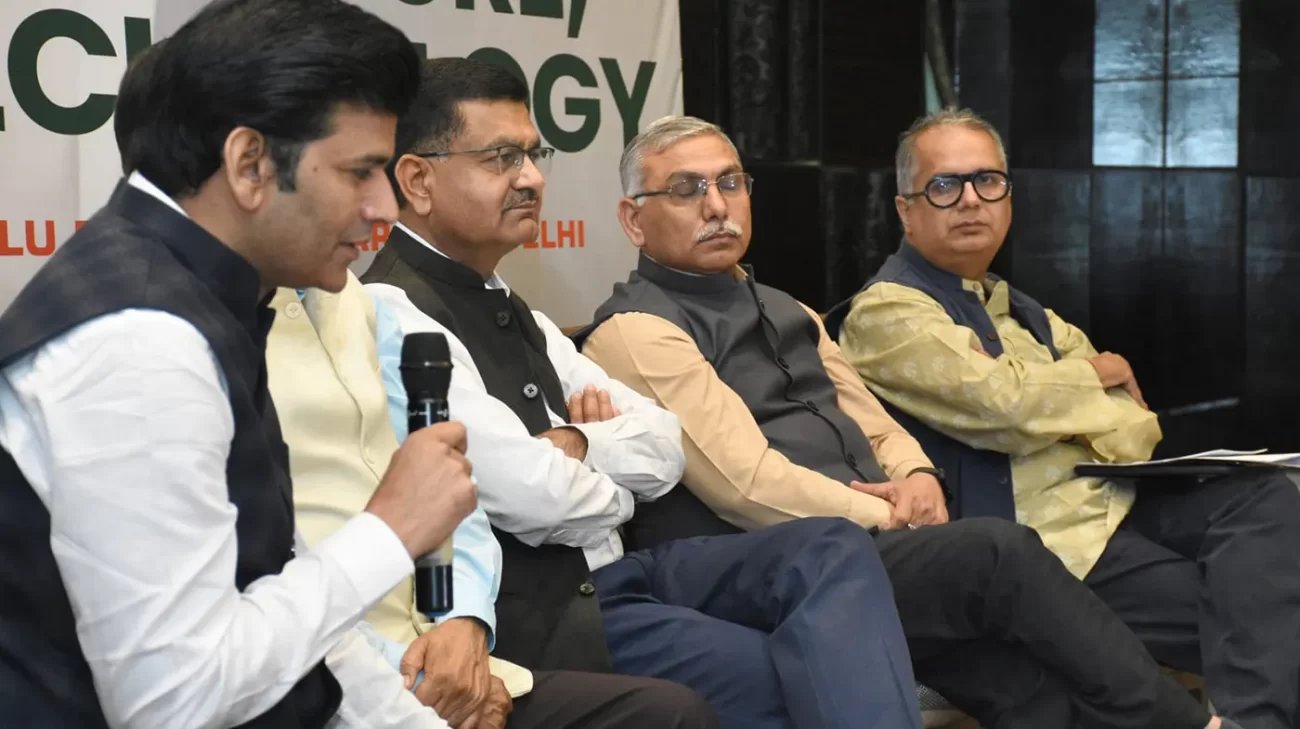
The summit featured several distinguished speakers who shared valuable insights into India’s agriculture policy landscape.
Shri P K Singh, Commissioner of Agriculture, Government of India, provided an overview of national agricultural policy frameworks. He highlighted the government’s ongoing efforts to promote digital agriculture, sustainable farming initiatives, and farmer-focused programs.
His address emphasized that policy reforms must focus on empowering farmers with knowledge, technology, and market access.
Another prominent speaker, Shri KML Pathak, former Deputy Director General (Animal Husbandry), spoke about the importance of integrating livestock farming with modern technology. He explained how advancements in animal health monitoring, breeding technologies, and digital tracking systems can significantly improve productivity and farmer income.
Innovations in Horticulture and Supply Chain Management
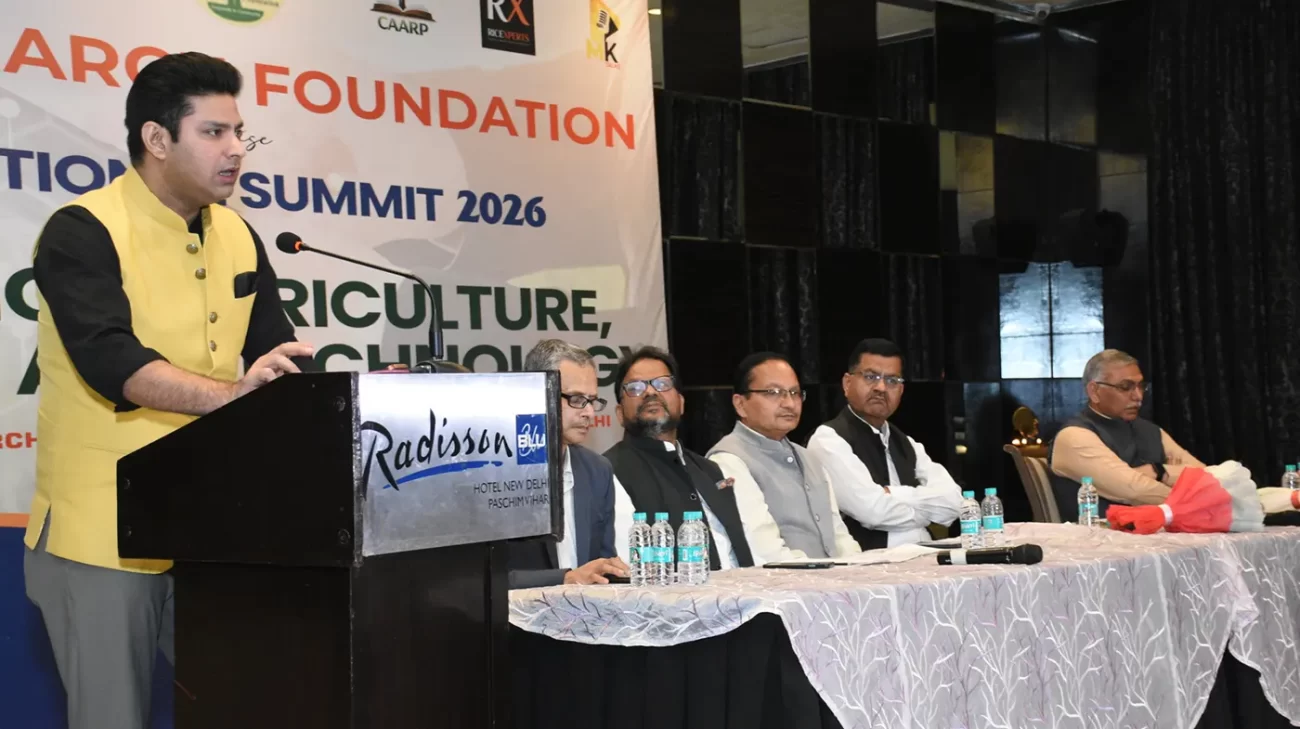
The summit also explored innovations in the horticulture sector, which plays a vital role in India’s agricultural economy.
Mr. Sudhakar Pandey, Additional Director General (Horticulture), discussed the need to strengthen horticultural production systems and supply chain infrastructure.
He highlighted that better logistics, cold storage facilities, and digital supply chain management can help reduce post-harvest losses and improve market opportunities for farmers.
These improvements are crucial for ensuring that farmers receive fair prices for their produce while consumers benefit from better quality agricultural products.
Grassroots Perspectives from Farmers
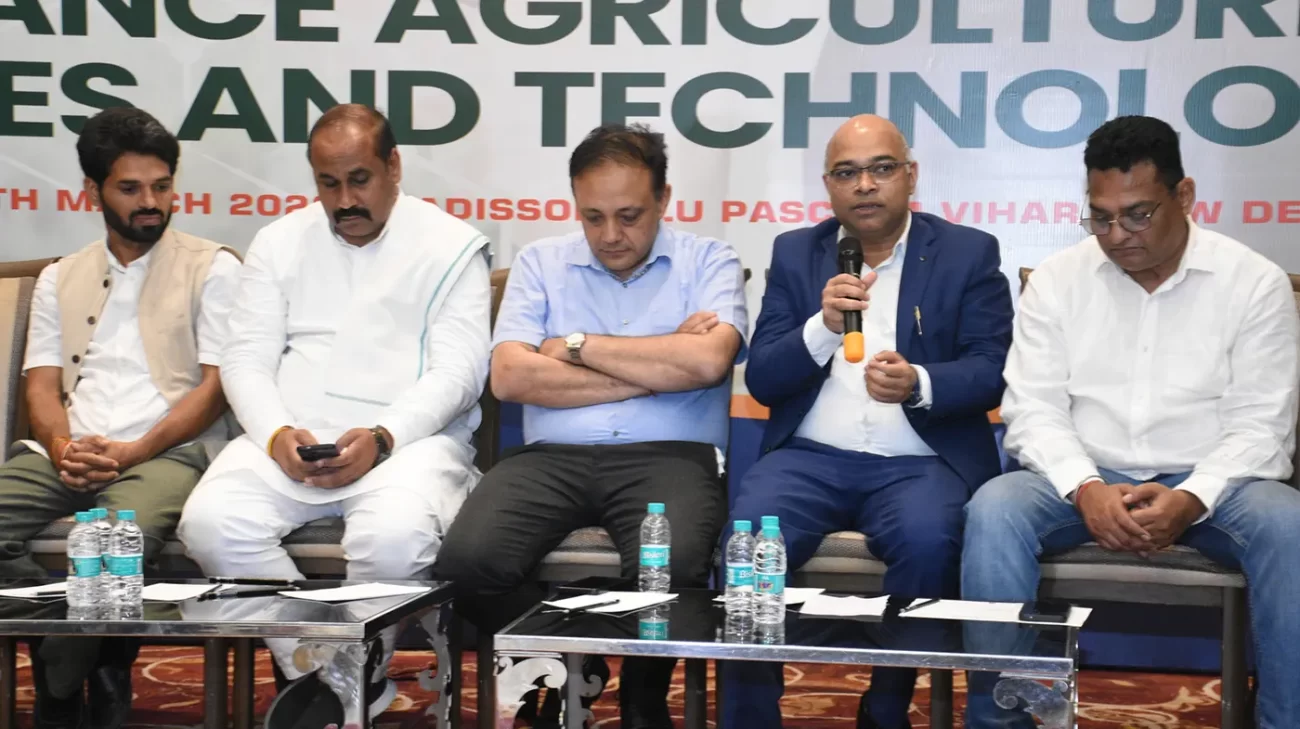
One of the most impactful aspects of the summit was the participation of progressive farmers who shared real-life experiences and practical insights.
Dharmendra Malik, a prominent farmers’ leader, offered a grassroots perspective based on extensive research and field experience. He emphasized that policy discussions must always consider the real challenges faced by farmers at the ground level.
Farmers shared success stories related to:
- Adoption of precision farming techniques
- Use of digital farm management platforms
- Implementation of sustainable crop practices
At the same time, they also discussed hurdles such as limited access to technology, lack of training, and financial constraints.
These insights helped bridge the gap between policy discussions and on-ground realities.
A Platform for Collaboration and Innovation
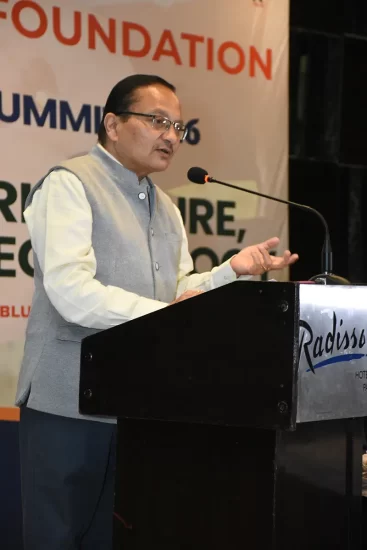
The Advance Agriculture Policies and Technology Summit 2026 served as a powerful platform for knowledge exchange and collaboration among different stakeholders.
The event was successfully conducted by economic expert Dr. Ravi Singh and agriculture journalist Suman Choudhary, who guided discussions around modern farming technologies, policy reforms, and sustainable development for farmers.
Through meaningful dialogue and expert insights, the summit encouraged participants to explore innovative strategies for building a more resilient, productive, and sustainable agricultural sector.
The Road Ahead for Indian Agriculture
The discussions at the summit made it clear that the future of Indian agriculture depends on the integration of policy support, technological innovation, and farmer participation.
Experts concluded that sustainable growth in agriculture requires:
- Strong policy implementation
- Technology-driven farming solutions
- Better infrastructure and supply chains
- Continuous farmer education and training
With the right combination of government support, research innovation, and farmer engagement, India can move toward a more sustainable and technologically advanced agricultural ecosystem.
Events like the Advance Agriculture Policies and Technology Summit 2026 play a vital role in shaping conversations that will influence the future of farming in India.