
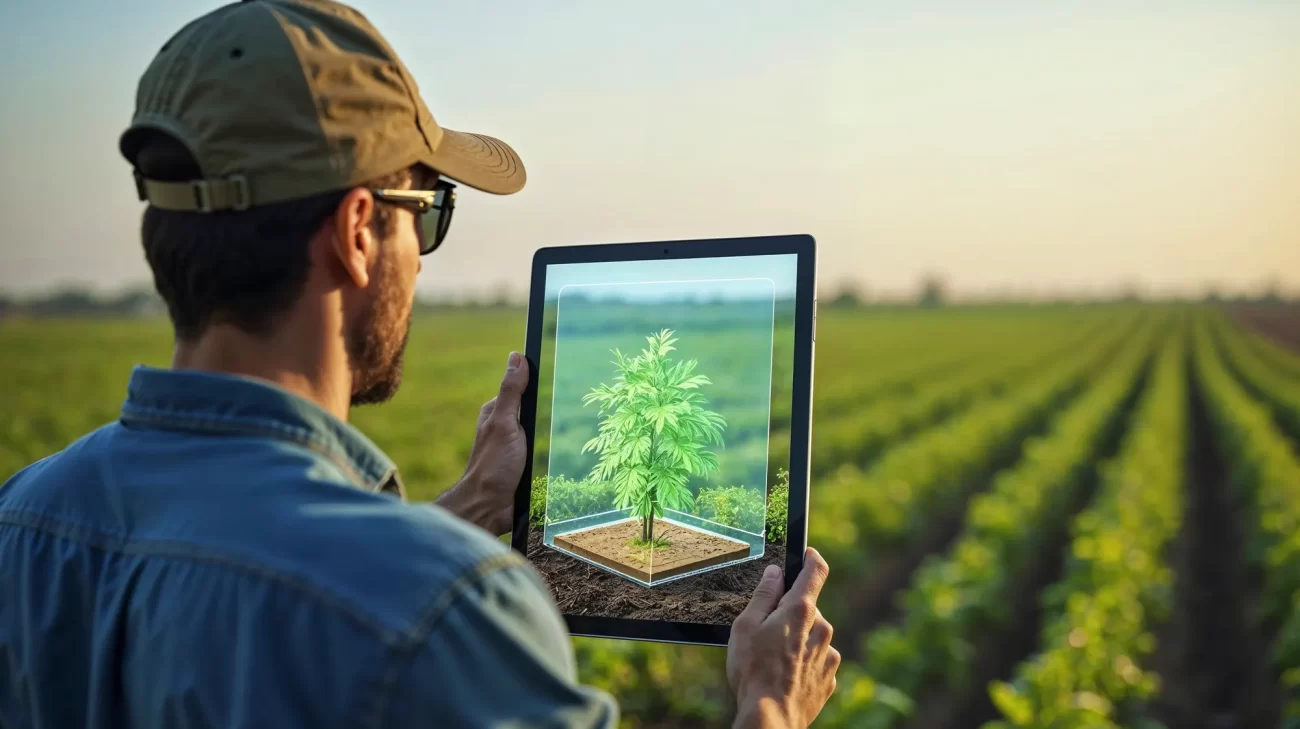
Introduction: Agriculture at the Core of India
Agriculture is the backbone of India — shaping its culture, identity, and economy. Nearly 46% of the population depends on farming for livelihood, and the sector contributes about 18.2% to the nation’s GDP. These figures reflect agriculture’s immense importance, yet behind them lies a sector facing deep structural challenges.
Crop yields in India remain significantly lower than global averages. More than half of agricultural land depends on rainfall, making production vulnerable to climate variability. Additionally, an estimated 15% of agricultural output is lost post-harvest due to inadequate storage, inefficient transportation, and limited market access. Most Indian farmers operate on small landholdings with constrained resources, intensifying these challenges.
Can Artificial Intelligence Be the Solution?
In recent years, Artificial Intelligence (AI) has begun to make inroads into Indian agriculture, offering practical solutions to long-standing problems. AI enables farmers to make better-informed decisions, optimize water and fertilizer use, and plan crops with greater confidence.
Rather than replacing farmers, AI serves as a decision-support tool, enhancing traditional knowledge with data-driven insights.
How AI Is Transforming Farming Practices
AI-powered solutions are already assisting farmers across multiple areas:
- Crop planning and advisory based on soil, weather, and crop data
- Pest and disease prediction, enabling early intervention
- Smart irrigation systems that reduce water usage by up to 80% while increasing yields by 20–30%
- Precision fertilization, minimizing waste and lowering input costs
Digital platforms now connect more than 15 million farmers in India, offering personalized recommendations tailored to crop type, soil conditions, and local climate patterns.
Reducing Post-Harvest Losses and Improving Market Access
Beyond the farm, AI is helping reduce post-harvest losses by improving:
- Demand forecasting
- Supply chain efficiency
- Direct market linkages between farmers and buyers
By connecting farmers directly to markets, AI-driven platforms can improve price realization and reduce dependency on intermediaries.
Barriers to AI Adoption in Indian Agriculture
Despite its potential, AI adoption faces several obstacles:
- Incomplete digitization of land records
- Limited availability of region-specific datasets
- Low digital literacy among many rural farmers
- Lack of awareness about available AI tools
- An evolving regulatory framework for testing and validating AI-based solutions
Without addressing these issues, small and marginal farmers risk being left behind in the digital transformation.
Policy Support Needed for AI Integration
For AI to scale inclusively, India needs:
- AI validation and testing centers for agriculture
- Clear data privacy and governance regulations
- AI-linked credit and insurance schemes
- Capacity-building programs to improve digital skills among farmers
These measures can help integrate smallholders into the emerging agri-tech ecosystem.
A Turning Point for Indian Agriculture
Indian agriculture stands at a critical juncture, shaped by climate change, resource constraints, and rising food demand. AI offers a viable, proven, and scalable solution, and India is well positioned to lead this transformation.
National initiatives such as Digital India and Startup India have already created a strong technological foundation. The real challenge now is translating innovation into measurable impact at the field level.
Conclusion: From Technology to Transformation
The future of Indian agriculture depends not just on innovation, but on its effective adoption. Artificial intelligence can significantly enhance productivity, sustainability, and farmer incomes — but only if supported by policy, infrastructure, and education.
True transformation will occur when AI moves beyond pilots and platforms to become an everyday tool in the hands of farmers, bridging the gap between technology and the soil it aims to serve.