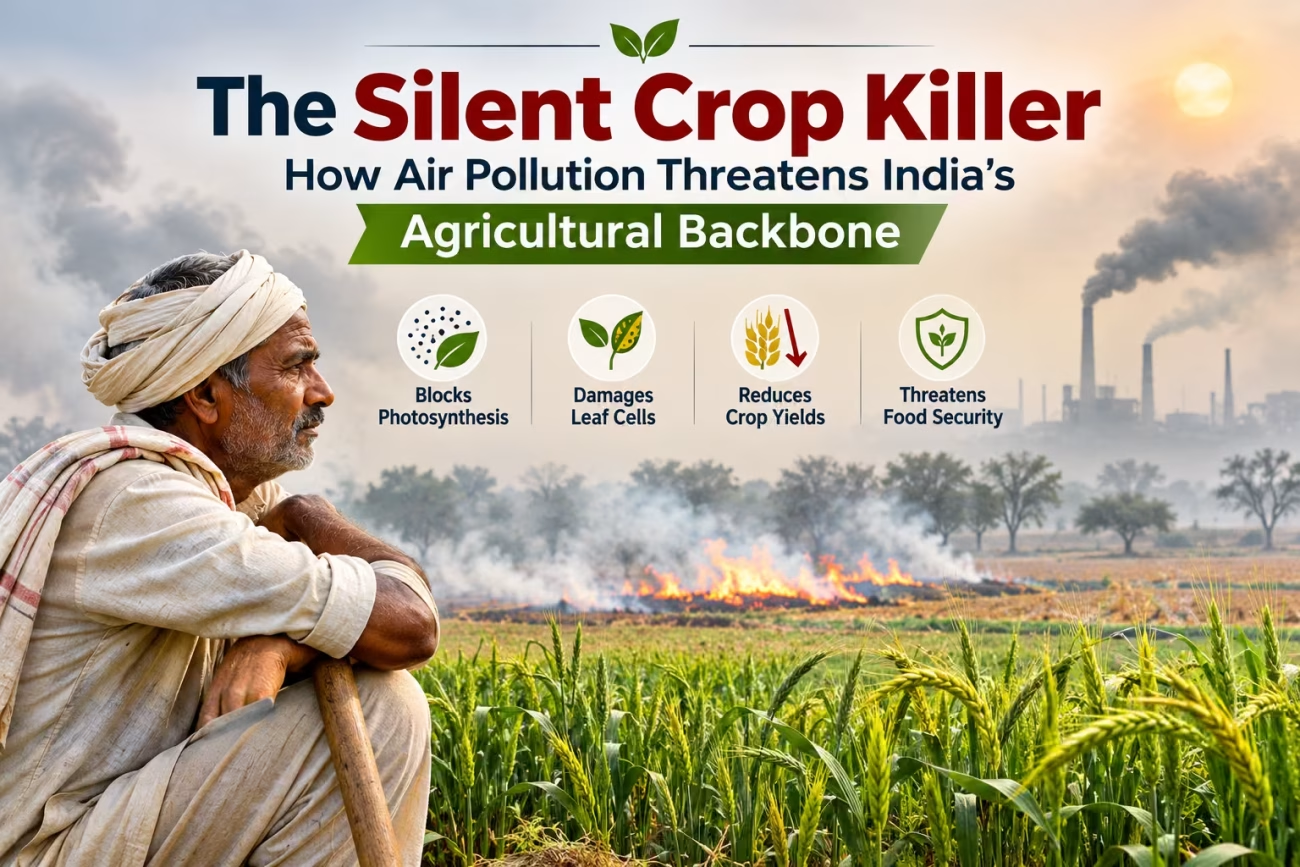
“Act before it is too late, or watch our agriculture crumble. Air pollution is proving to be a silent killer for our crops, demanding urgent and unwavering commitment.”
When discussions around air pollution peak across India, public attention naturally fixates on urban smog, rising AQI numbers, and respiratory health emergency visits. However, beyond city limits lies a quieter, equally devastating crisis: the severe impact of toxic air quality on India’s agricultural output and crop health. While climate change factors like shifting monsoons and heatwaves receive widespread coverage, air pollutants act as direct, chemical stressors on crops, lowering food production and threatening national food security
The Indian Scenario Right Now
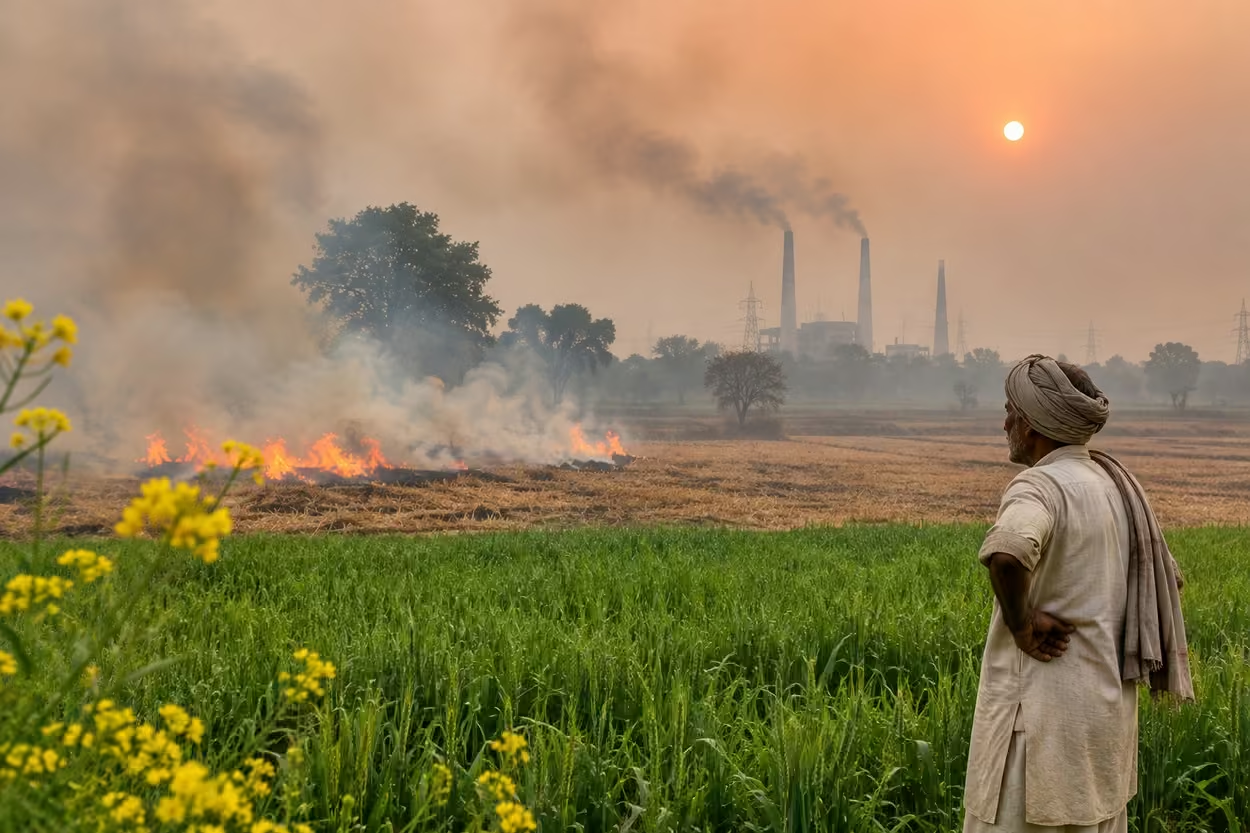
India’s agricultural belts—particularly the Indo-Gangetic Plains encompassing Punjab, Haryana, Uttar Pradesh, and Bihar—are double-exposed to severe environmental strain. During post-harvest seasons, heavy smoke from crop-residue burning combines with industrial emissions, vehicular exhaust, and dust.
Journal of Health Science Research
Key pollutants affecting Indian fields include:
- Ground-Level Ozone ( O 3 ): Unlike stratospheric ozone, ground-level ozone is formed when nitrogen oxides ( NO x ) and volatile organic compounds ( VOCs) react under sunlight. It is an invisible yet toxic pollutant.
- Particulate Matter ( PM 2.5 and PM 10 ): Fine particulate matter settles directly over leaf surfaces, obstructing vital physiological functions.
International Journal of Creative Research Thoughts - Black Carbon and Aerosols: Incomplete combustion of bio-mass and fossil fuels releases black carbon, altering atmospheric radiation and light intensity reaching crops. Scroll.in
The Impact on Crops:
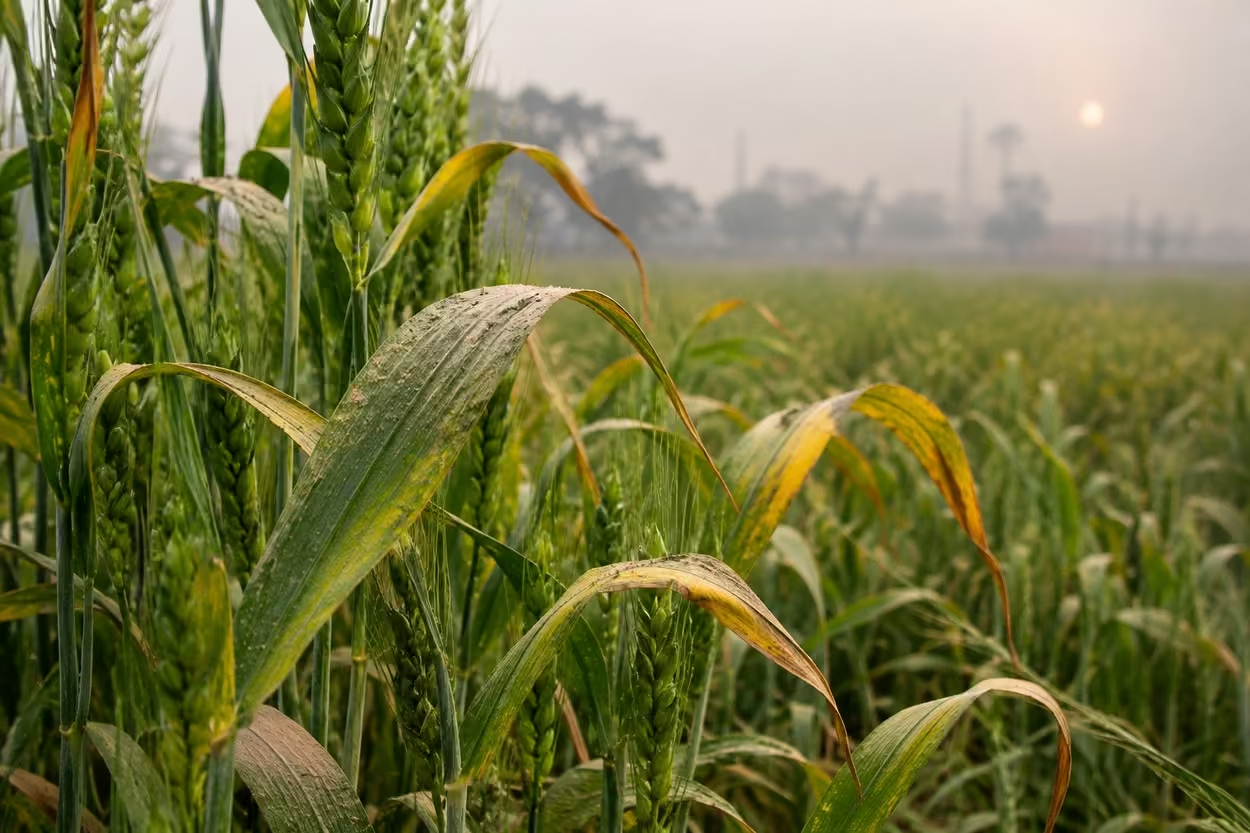
Yield Loss, Toxins, and Stunted Growth Air pollution inflicts damage on crops through direct chemical toxicity and physical obstruction:
- Suppression of Photosynthesis: Particulate matter deposits a dusty layer over leaves, blocking sunlight and clogging stomata (tiny leaf pores). This stifles gas exchange and drastically slows down photosynthesis.
- Cellular Damage via Ground Ozone: Ground-level ozone enters plant tissues through stomata and induces oxidative stress. This damages leaf membranes, leads to premature chlorosis (yellowing), and weakens plant immunity.
International Journal of Creative Research Thoughts - Quantifiable Yield Reductions: Scientific evaluations reveal that air pollutants significantly suppress cereal production. Studies indicate that combined ozone and black carbon pollution can reduce wheat yields in northern India by over 30%, while rice crop losses due to surface ozone vary between 4% and 15% depending on regional pollution intensity.
Scroll.in
Scientist’s Perspective
Scientific consensus stresses that climate change models are incomplete without factoring in short-lived air pollutants. Because black carbon lives in the atmosphere for a few weeks and ozone for a few months, targeted pollution control offers immediate, visible returns for crop yields.
How We Can Reduce the Impact
of Air Pollution on Crops Mitigating crop losses requires actionable farming interventions combined with regional pollution controls:
- Adopting Early-Maturing Crop Varieties: Sowing crop varieties that mature before peak seasonal pollution periods (such as mid-autumn stubble burning and winter inversion) minimizes exposure to toxic air.
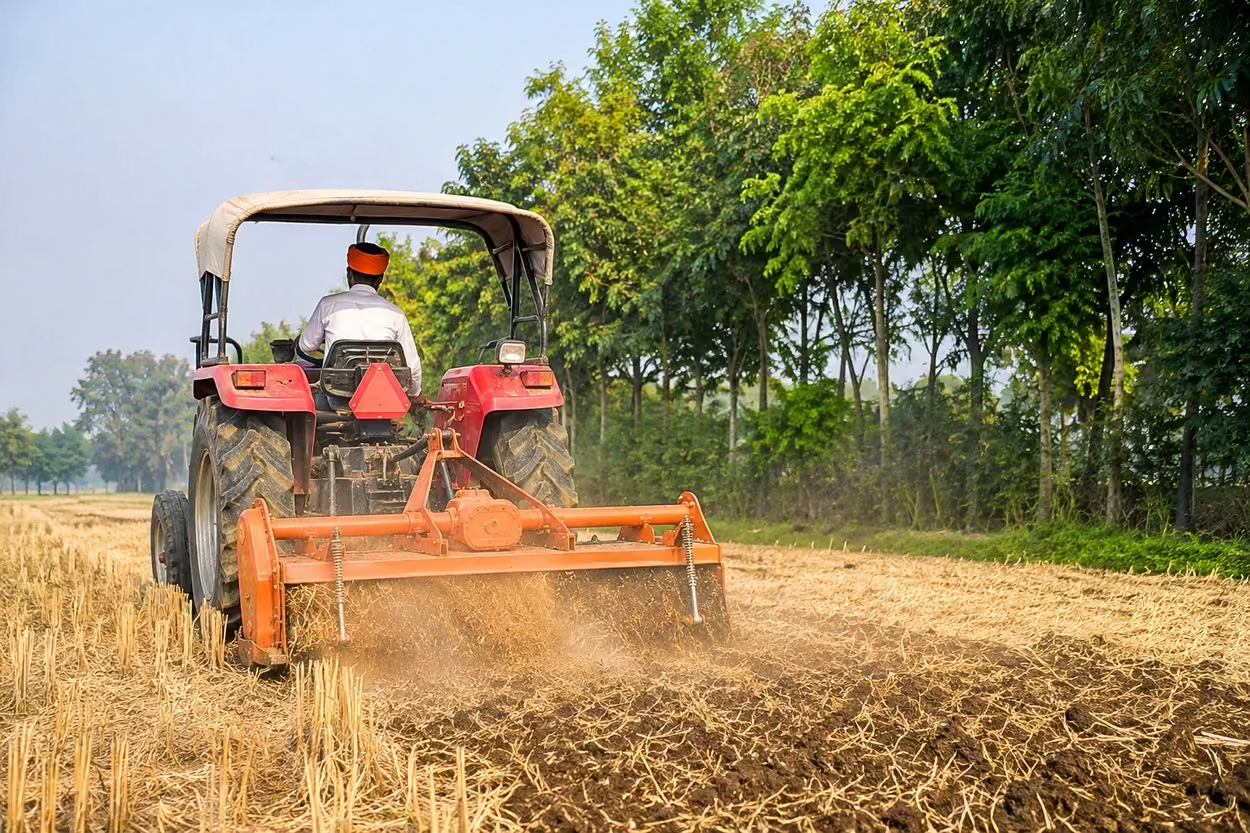
- In-Situ Stubble Management: Shift away from crop residue burning by utilizing machinery like Happy Seeders, Super Straw Management Systems (SMS), and bio-decomposers (e.g., Pusa Bio-Decomposer) to incorporate crop residue into the soil as organic matter.
- Antioxidant Sprays & Soil Amendments: Applying bio-stimulants, biochar, and ascorbic acid-based anti-ozonant sprays can bolster a crop’s internal defense against oxidative stress caused by ground-level pollutants.
- Green Belts and Bio-Shields: Planting dense vegetative buffer zones (trees and hardy shrubs) around agricultural fields helps absorb particulate matter before it settles on sensitive food crops.
Major Government Initiatives
for Air & Water Pollution To address environmental degradation and protect ecosystem Health, the Government of India has instituted several key regulatory frameworks and schemes:
Air Quality & Stubble Management Initiatives National Clean Air Programme (NCAP): Launched to reduce PM 2.5 and PM 10 concentrations across key non-attainment cities, addressing regional air sheds that spill over into agricultural zones.
- Crop Residue Management (CRM) Scheme: Provides subsidies (up to 50–80%) to farmers and custom hiring centers to purchase specialized machinery, significantly lowering the economic burden of managing agricultural waste without burning.
- Commission for Air Quality Management (CAQM): A dedicated statutory body regulating air quality across the National Capital Region (NCR) and adjoining areas, enforcing seasonal bans and stubble management monitoring.
Water Quality & Watershed Protection Initiatives Namami Gange Programme: A flagship initiative with multi-billion rupee funding targeting industrial effluent treatment, domestic sewage management, and riverbank bio-remediation along the Ganga basin.
UPCCCE-Uttar Pradesh Climate Change and Clean Environment
- Jal Jeevan Mission (JJM): Focused on providing safe tap water to every rural household while prioritizing source sustainability through greywater management and groundwater recharge.
UPCCCE-Uttar Pradesh Climate Change and Clean Environment - Pradhan Mantri Krishi Sichayee Yojana (PMKSY): Promotes micro-irrigation (“Per Drop More Crop”) to reduce chemical runoff into natural water bodies and improve water-use efficiency.
Looking Ahead
Addressing air pollution is not purely an urban public health goal—it is a critical agricultural imperative. Protecting Indian agriculture from polluted air requires bridging environmental science with agricultural policy, ensuring that clean air becomes recognized as a primary agricultural input alongside soil, water, and seeds.
(Ref: International Journal of Creative Research Thoughts and Scroll.in)
An article by; Alok Ranjan